45% of all heart attacks are silent3
This may lead to missed or late diagnoses, increasing unnecessary hospitalizations and avoidable cardiac events.



Cardio Explorer® is a non-invasive, AI-based diagnostic algorithm that combines biomarker and clinical data to improve early detection of coronary artery disease (CAD).1
Overview
Coronary artery disease (CAD) represents a significant global burden.2 It contributes substantially to morbidity, mortality and high healthcare costs. The current standard of care lacks patient-specific assessments, which leads to additional testing and delayed diagnosis. Cardio Explorer® supports coronary artery disease risk assessment using an AI-enhanced algorithm that analyzes biomarkers, ECG data, symptoms and clinical risk factors to estimate the clinical likelihood of obstructive CAD in patients with suspected chronic coronary syndrome (CCS).
This may lead to missed or late diagnoses, increasing unnecessary hospitalizations and avoidable cardiac events.
2 in 3 women who die of a heart attack had no symptoms.4 Women and people with diabetes may lack classic signs.

Coronary artery disease is consistently ranking among the top causes of disability-adjusted life years (DALYs) worldwide.2,5

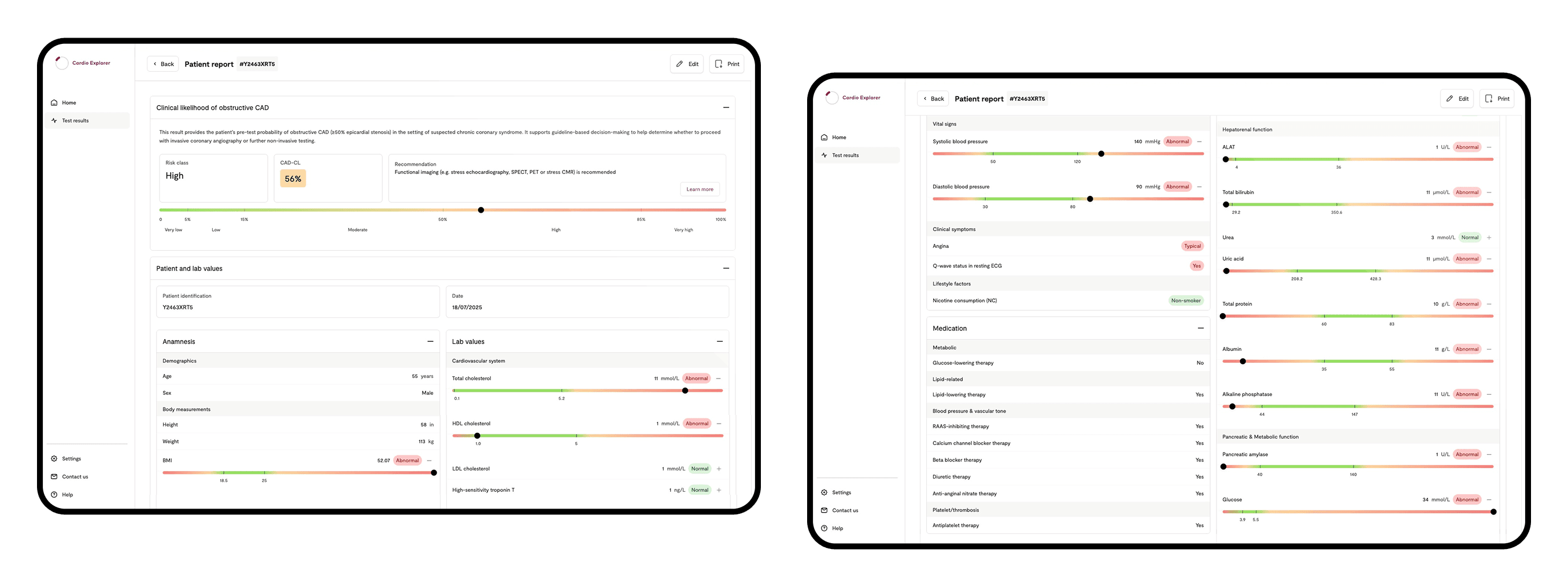
The algorithm analyzes patient-specific clinical information and blood-based biomarkers to estimate the likelihood of obstructive coronary artery disease (CAD). It demonstrated strong diagnostic performance, with an area under the ROC curve (AUC) of 0.87 in clinical studies.6 Cardio Explorer® was validated in over 4,500 patients across four studies with endpoints including stenosis and ischemia.6,7 The result provides a numerical estimate that supports guideline-aligned evaluation of suspected chronic coronary syndrome.
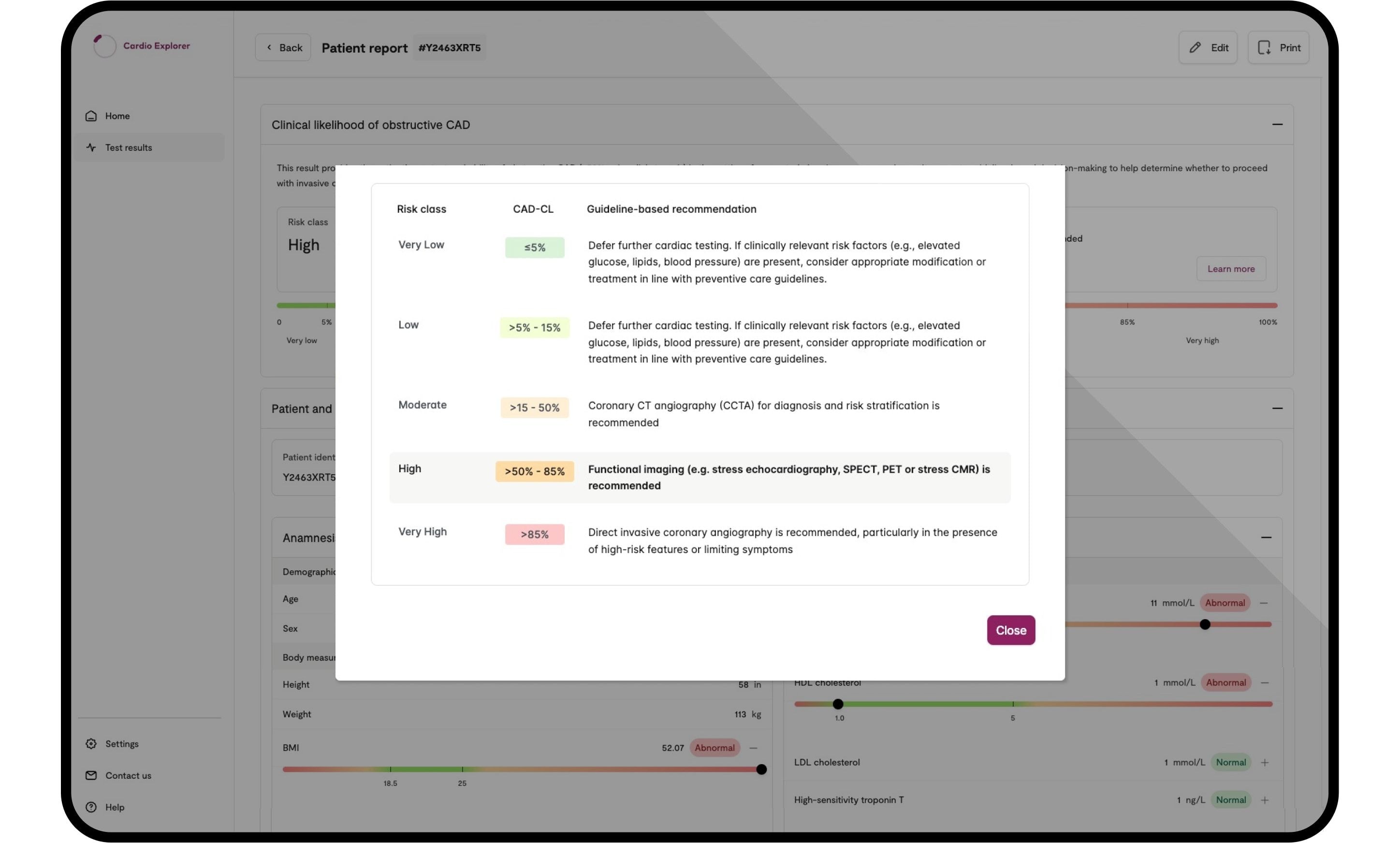
Cardio Explorer® calculates the individual clinical likelihood of CAD, stratified in personal risk groups and recommends a guideline-based diagnostic pathway.

Benefits
Cardio Explorer® calculates the clinical likelihood of CAD with comparable accuracy to imaging. As such, it ensures the most efficient triaging for patients with suspected CAD, leading to quicker diagnosis and better patient care while safely ruling out healthy individuals and therefore reducing unnecessary diagnostic procedures and saving money and resources. Clinically, it can be applied across the full spectrum of care, from primary to secondary to emergency settings.
Delivers reliable risk stratification at a fraction of the cost of traditional imaging technologies.

Provides an objective, guideline-aligned risk score that helps determine the need for further diagnostic testing.

Helps identify patients with elevated risk of significant coronary stenosis before clinical events occur.

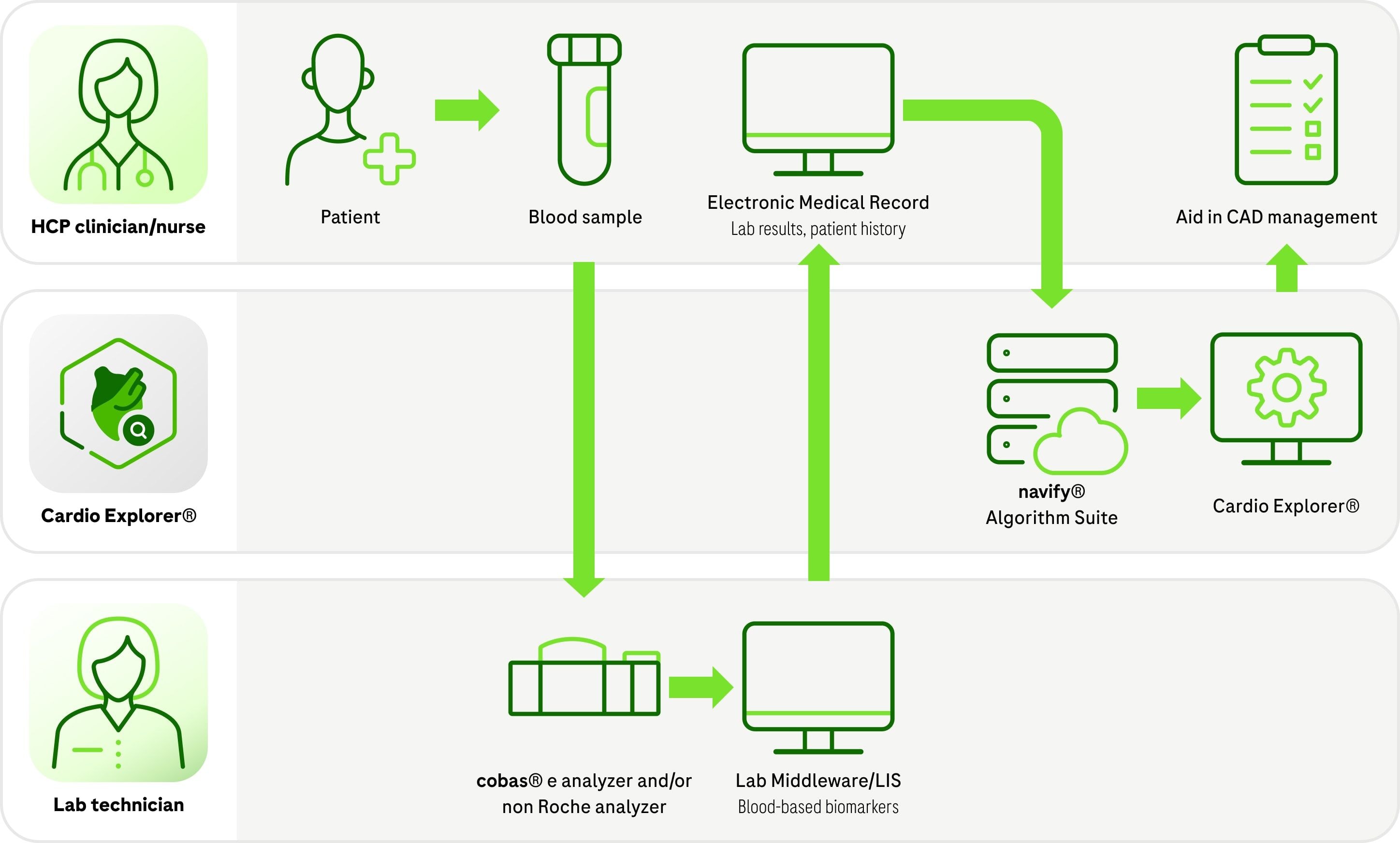
Experience a single integrated platform designed for healthcare providers and laboratories that simplifies IT complexity while reducing the risk of vulnerabilities. With integrated Roche and partner medical algorithms, we provide a comprehensive solution that streamlines processes and enhances collaboration.
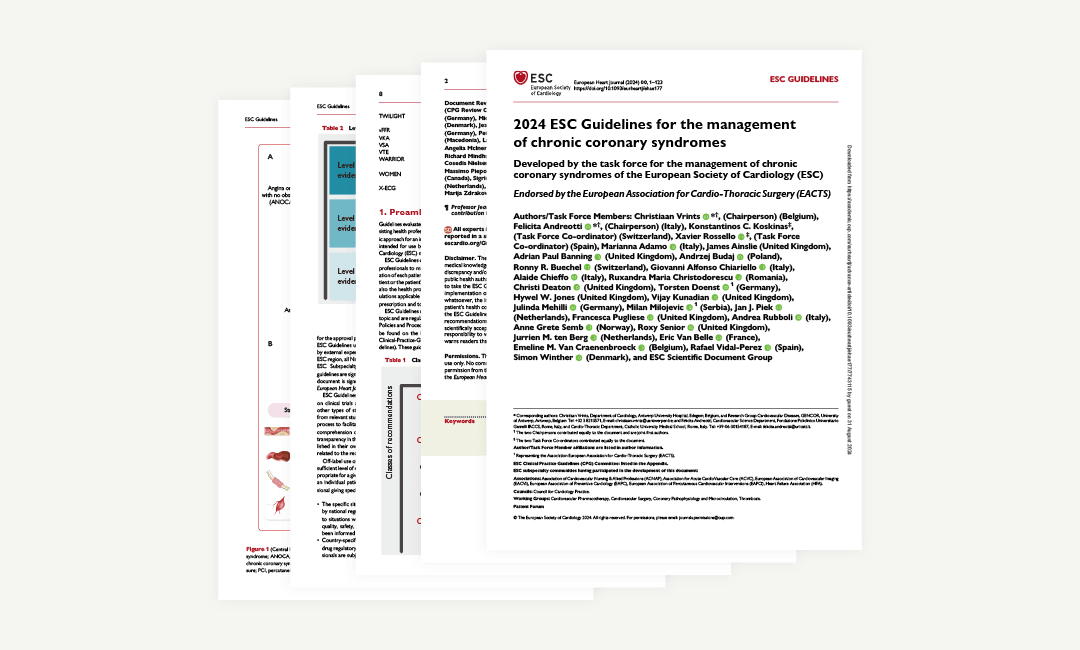
These guidelines from the European Society of Cardiology outline recommendations for the evaluation and management of chronic coronary syndromes (CCS), including the clinical presentation of coronary artery disease (CAD) during stable phases, particularly before or after an acute coronary syndrome (ACS).

Access the official Instructions for Use for Cardio Explorer® software version 2.0. The document provides information on the intended use, patient population, input parameters, result interpretation and system requirements to support the correct and safe use of the algorithm in clinical practice.
If you don’t find answers to your questions here, we’re happy to provide more information and discuss your needs in detail.

At Roche Diagnostics, we understand the need to go beyond our products and see the bigger picture, creating a world where product and services come together. Roche Service Solutions refers to our service offering and encompasses our full service portfolio. Our total solution package means we can provide you with the personalised mix of products and services you need. Our digital services enable you to quickly connect with us and help make your life more manageable.