
Change region or lenguage
Overview

Clinical algorithms that support your practice in triaging patients with suspected MASLD and assessing fibrosis severity

Metabolic dysfunction-associated steatotic liver disease, MASLD, is the leading cause of liver-related morbidity and mortality,³ affecting nearly 1 in every 3 people.⁴ Diagnosis of advanced fibrosis due to MASLD remains a challenge due to its silent progression and vast prevalence, with over two-thirds of cases undiagnosed.⁵

As MASLD progresses, it may lead to metabolic dysfunction-associated steatohepatitis, MASH. Approximately 20% of patients with MASH with advanced fibrosis or compensated cirrhosis will progress to cirrhosis or develop decompensation, respectively, over a 2-year time period.⁶

navify algorithms, FIB-4 Index and ADAPT by Evidencio are clinical algorithms that assess the likelihood of advanced liver fibrosis and fibrosis severity in patients showing evidence or signs of MASLD. 

Healthcare worker in scrubs shows a tablet to an older patient sitting on an exam table in a bright clinic room.

navify® Algorithms, FIB-4 Index and ADAPT by Evidencio, LiverPRO by Evido (coming soon)

By Evidencio

Clinical algorithms to support MASLD assessment: FIB-4 Index helps triage advanced fibrosis likelihood¹, followed by ADAPT which helps assess fibrosis severity.²

Coming soon: A closer look into navify Algorithms, LiverPRO (by Evido)

Global prevalence is 38% and rising⁴

The prevalence of MASLD will be increasing parallel to the prevalence of metabolic diseases.⁷

90% of patients are undiagnosed⁸

MASLD is frequently asymptomatic in its early stages, allowing silent progression to more severe conditions.⁹

~€35 billion in annual medical costs¹⁰

The economic burden of MASLD is substantial and escalates notably with disease progression.¹¹

Liver fibrosis can be reversible, if caught early enough¹²

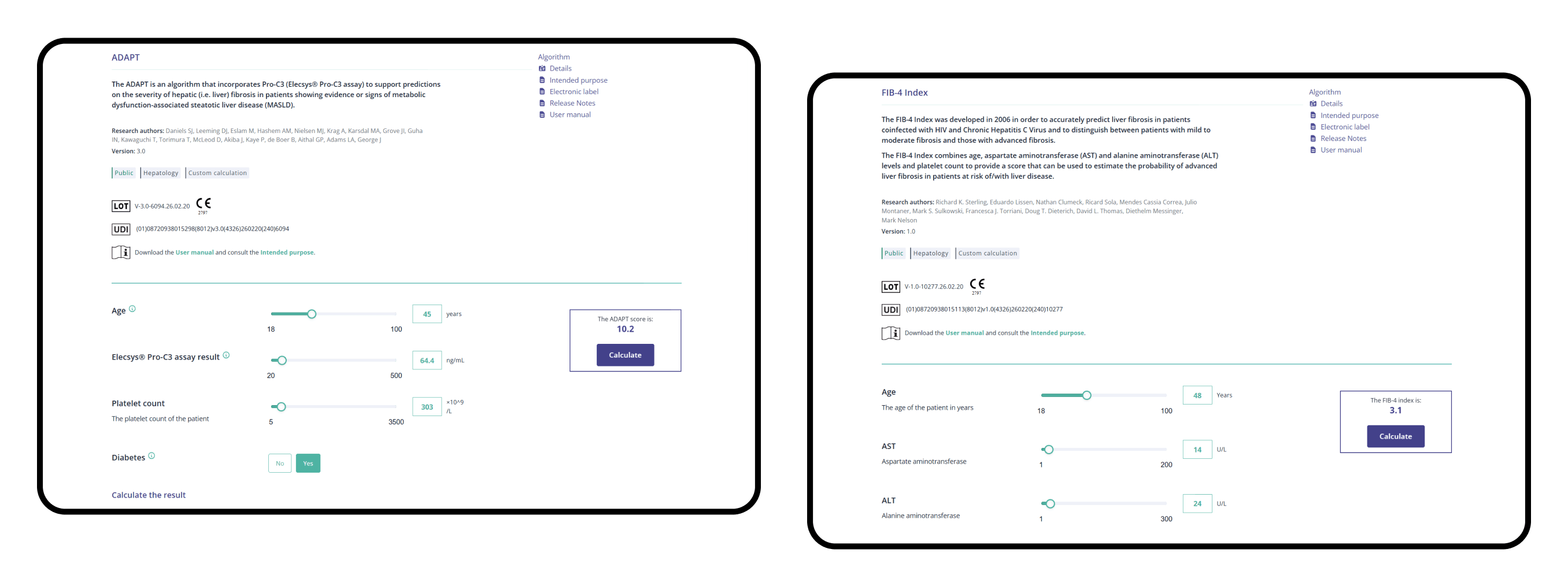
FIB-4 Index is a CE-marked Class C IVD* non-invasive risk stratification tool intended to be used by healthcare professionals as the first-line step in assessing the likelihood of advanced liver fibrosis (stage F3-F4). It is intended for use in adults suspected of MASLD to triage patients into low, Intermediate or high likelihood and therefore at-risk categories.¹

ADAPT is a CE-marked Class C IVD** algorithm intended to combine age, diabetes status, Elecsys® PRO-C3 concentration and platelet count to assess the severity of hepatic fibrosis in patients showing evidence or signs of MASLD.² 

Non-invasive tests

Rely on blood-based biomarkers: AST, ALT, platelet count for FIB-4 Index¹ and Elecsys® PRO-C3, and platelet count for ADAPT.²

High sensitivity and specificity

Combining high sensitivity of 1st line assessment, FIB-4 Index, with the high specificity of 2nd line assessment, ADAPT.¹³

In line with MASLD guidelines

ADAPT shows relative high performance in identifying MASLD with advanced fibrosis in tertiary hepatology care and in ruling out advanced fibrosis in low-risk populations.¹⁴

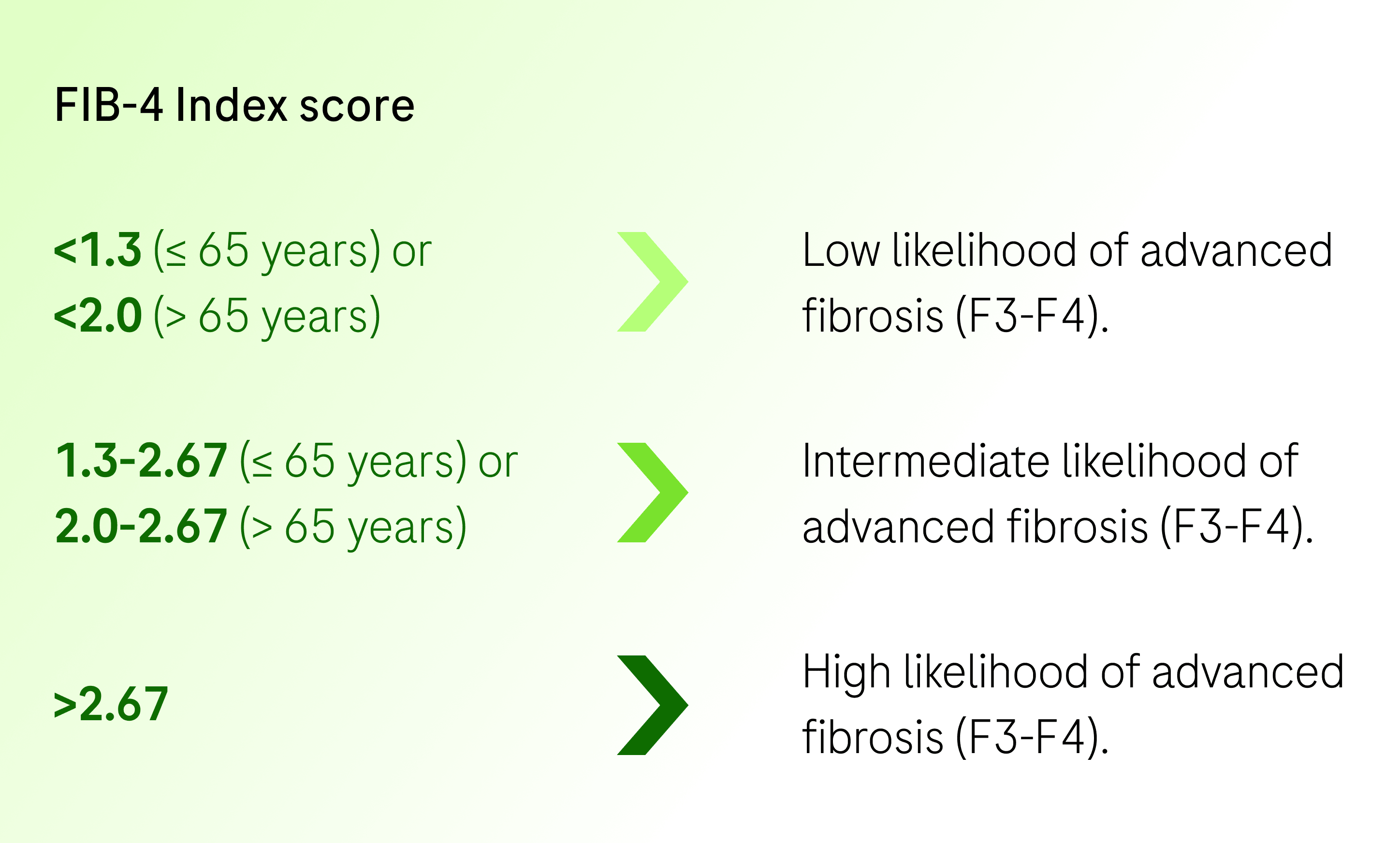
FIB-4 Index score interpretation. FIB-4 Index score less than 1.3 (age 65 or younger) or less than 2.0 (over 65 years): low likelihood of advanced fibrosis (F3–F4). Score 1.3 to 2.67 (age 65 or younger) or 2.0 to 2.67 (over 65 years): intermediate likelihood of advanced fibrosis (F3–F4). Score greater than 2.67: high likelihood of advanced fibrosis (F3–F4). Interpreting the score of FIB-4 Index: a numeric score interpreted based on cut-off values indicating different likelihoods of advanced liver fibrosis; note that results apply to MASLD population.

Interpreting the score of FIB-4 Index

The FIB-4 Index outcome is a numeric score that can be interpreted, based on cut-off values, as different likelihoods of having advanced liver fibrosis.¹,¹⁴ 

NOTE: results applicable for MASLD population.

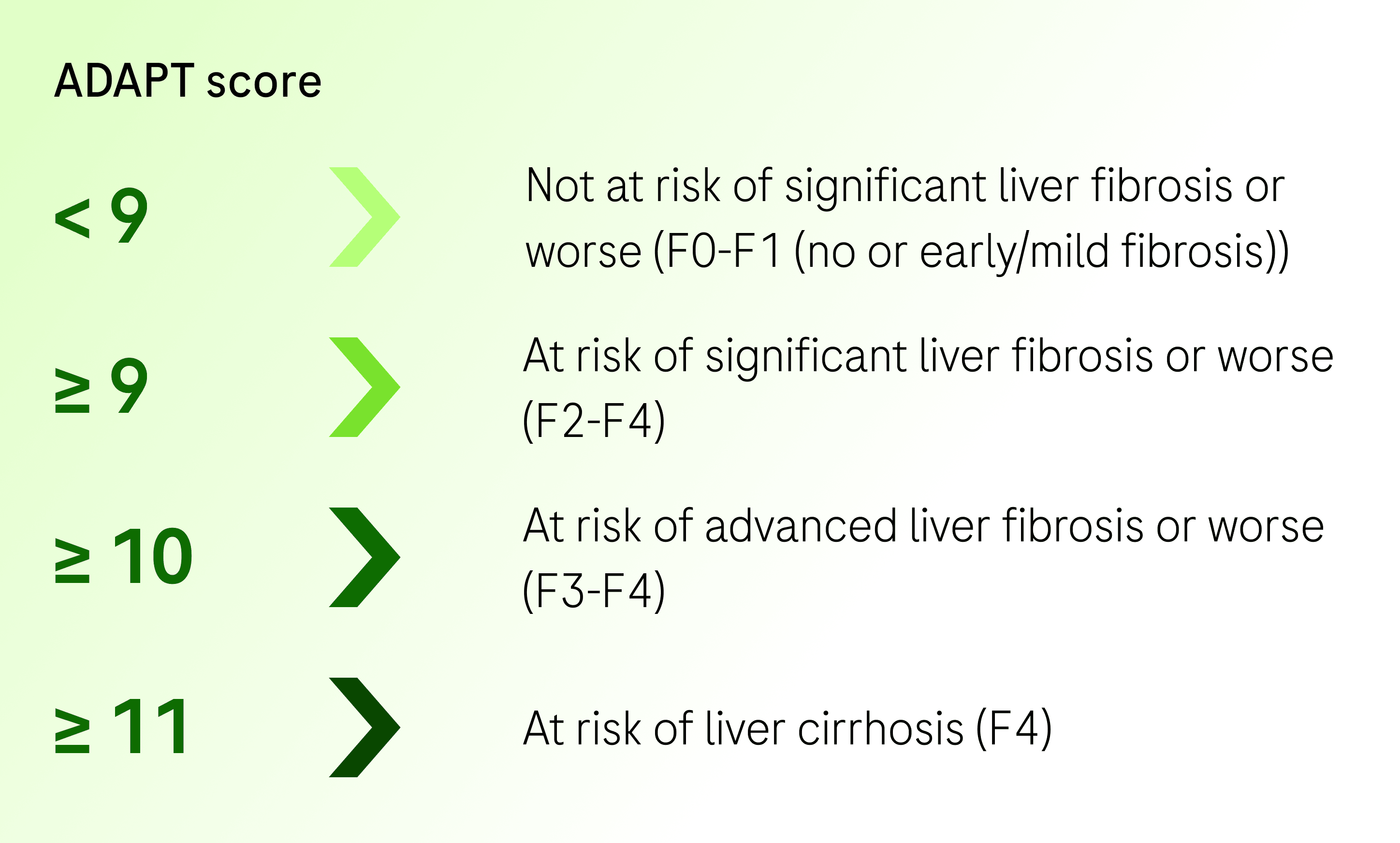
Interpreting the score of ADAPT. ADAPT score: less than 9 – at risk of significant liver fibrosis or worse (F0–F1, no or early/mild fibrosis); 9 or more – at risk of significant liver fibrosis or worse (F2–F4); 10 or more – at risk of advanced liver fibrosis or worse (F3–F4); 11 or more – at risk of liver cirrhosis (F4).

Interpreting the score of ADAPT

ADAPT's scoring system provides specific cutoffs for different stages of fibrosis, allowing clinicians to assess the severity of hepatic fibrosis in patients with significant fibrosis (≥F2), advanced fibrosis (≥F3) or cirrhosis (F4) and no intermediate zone.²,¹³

Benefits

Supporting patient throughput in MASLD assessment

Regulated FIB-4 Index and ADAPT algorithms, directly integrated into your workflow, could improve clinical decision-making, including potential streamlining of workflows, lower testing impact on healthcare budget, regulatory compliance and patient safety.

Streamlining patient throughput

ADAPT potentially reduces false positives, ensuring significant fibrosis patients are genuinely at risk.¹³

Reduce testing costs

Testing specificity is identified as the primary driver of potential savings, which ADAPT could contribute to.¹⁵

Legal and regulatory certainty

CE-mark ensures compliance for the use of formulas in the EU for a clinical purpose.¹⁶,¹⁷

Assurance of quality and cybersecurity

Evidencio products developed and validated under processes that comply with international standards (ISO 13485:2016; ISO 27001:2022).¹⁸,¹⁹

Integration

Integration via navify Algorithm Suite

Experience a single integrated platform designed for healthcare providers and laboratories that simplifies IT complexity while reducing the risk of vulnerabilities. With integrated Roche and partner medical algorithms, we provide a comprehensive solution that streamlines processes and enhances collaboration.

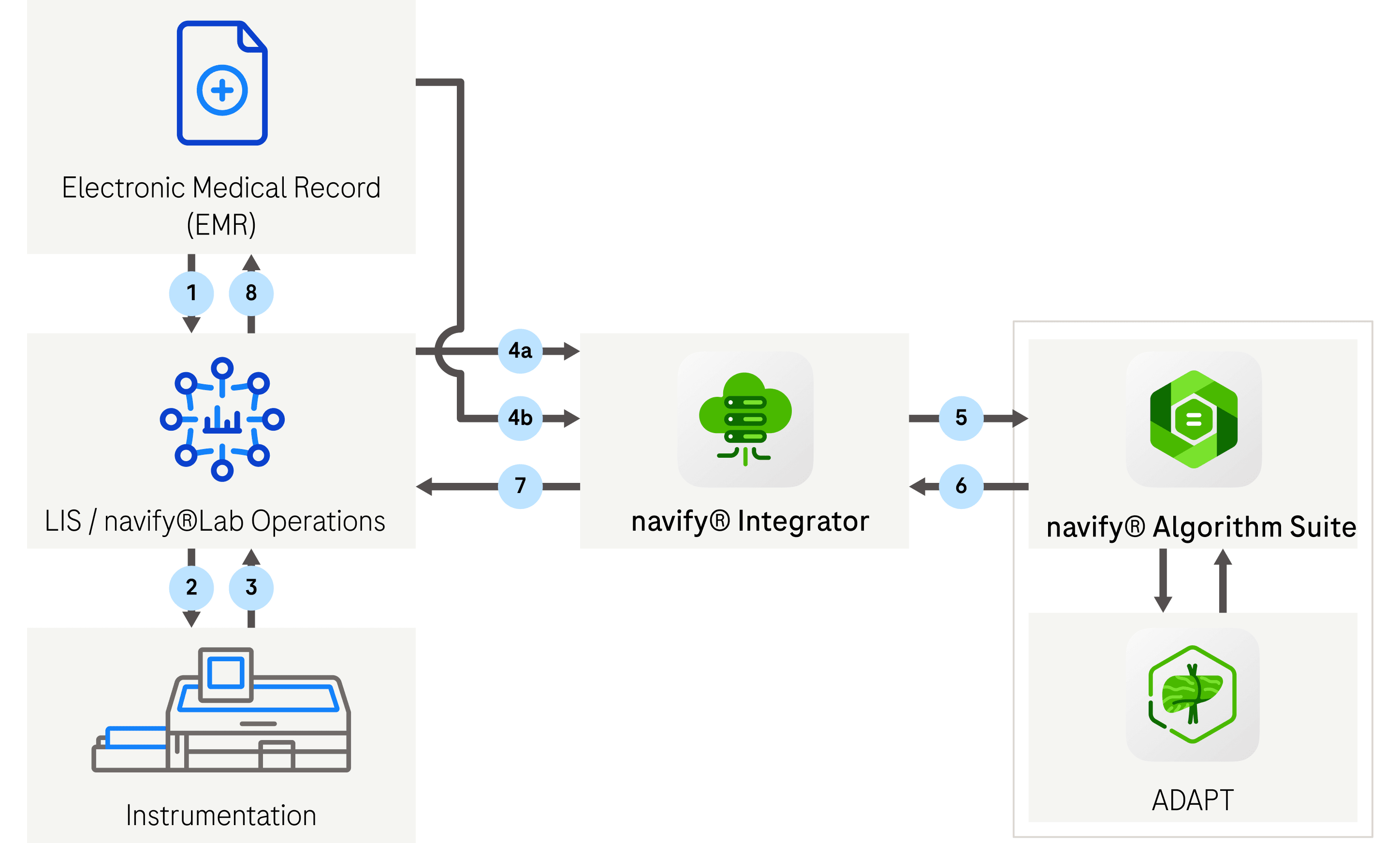
Integration workflow step by step²⁰

1) In the EMR, an order for the ADAPT is dispatched/ordered via Order Entry by HCP.

2) The order for Platelets, PRO-C3 (and others, as ordered) are transmitted to the devices; the results are being determined.

3) Results are transmitted from the device to the LIS.

4a) The request is sent to navify® Integrator via HL7 from the LIS.

4b) Certain input parameters, such as Diabetes Status, may only be provided by the EMR; this can be sent directly to navify Integrator via the Interoperability Engine for navify Integrator.

5) The request is transformed into a request that is standardized and sent to navify Algorithm Suite.

6) After computing ADAPT, the result is returned.

7) After receiving the result, it is returned to the LIS.

8) ADAPT score and interpretation is returned to EMR via the existing workflow.

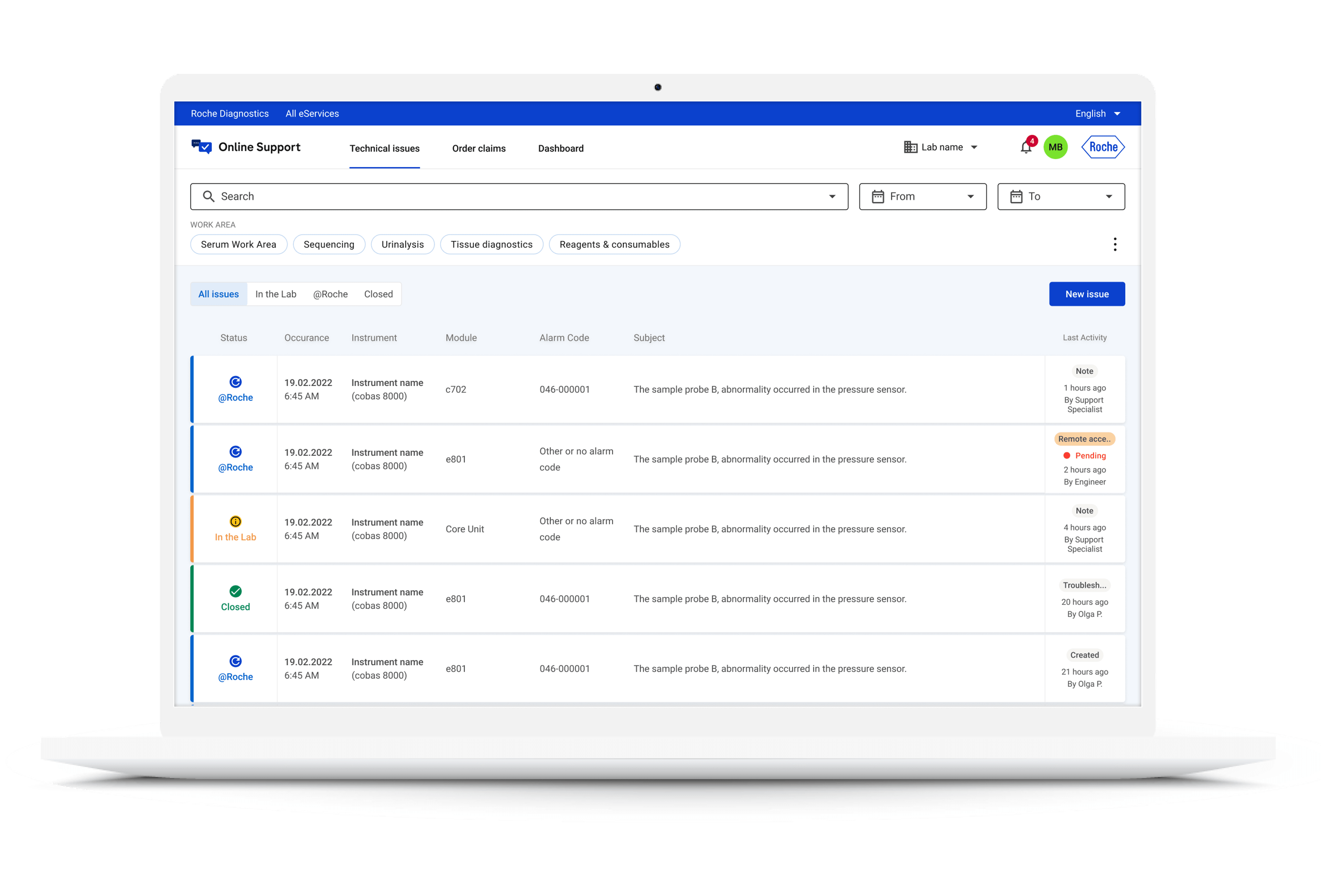
Roche online support dashboard.

Single point of contact for customer support

Roche offers centralized customer support for all algorithms in our portfolio to ensure consistency and reliability. We manage issues that arise for all hosted algorithms, streamlining the process and eliminating the need for customers to engage with individual providers.

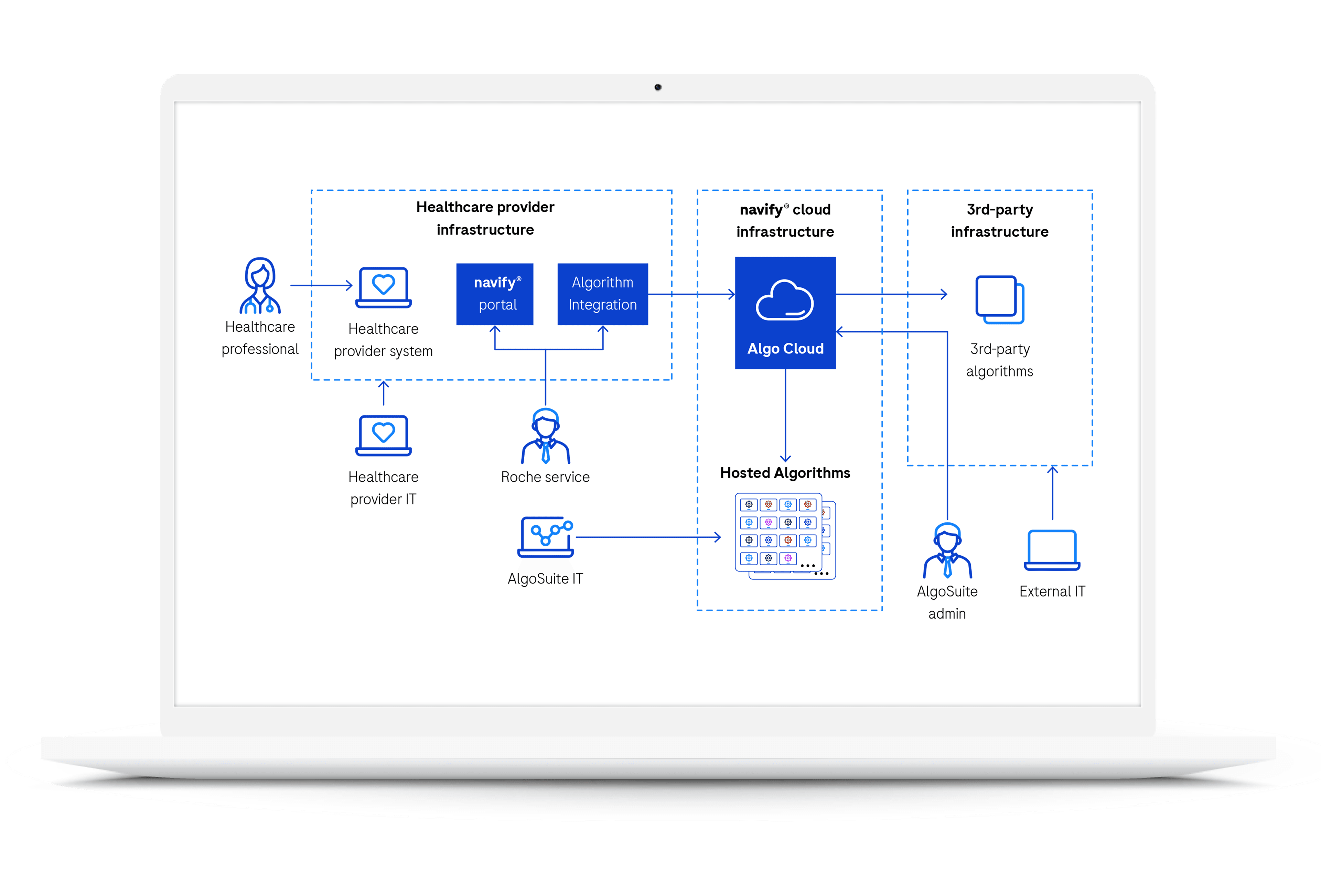
Healthcare cybersecurity infrastructure infographic.

Security and data privacy

Security and data privacy are central to Roche's operations, founded on a "Security and Privacy by Design" philosophy and ISO/IEC 27001 certification. Our dedicated technical team performs ongoing risk assessments, penetration tests and network monitoring to minimize IT complexity and vulnerabilities, prioritizing data confidentiality to protect patient information across all partners.

FAQs

Frequently asked questions

If you don’t find answers to your questions here, we’re happy to provide more information and discuss your needs in detail.

Unleash the power of digital transformation

Navigating digital transformation can be overwhelming. This is why we now offer tailored software plans designed to address your needs and challenges.

References and notes
  1. FIB-4 Index User Manual v1.0
  2. ADAPT User Manual v1.0
  3. Chan WK, et al. Metabolic dysfunction-associated steatotic liver disease (MASLD): a state-of-the-art review. J Obes Metab Syndr. 2023 Sep 30;32(3):197-213. doi:10.7570/jomes23052.
Disclaimer
  • Not every digital product is available in all markets. The use of any third-party app is subject to a separate license agreement with the respective third-party app developer. Roche gives no warranties (express or implied) with regard to any third-party app. Third-party apps might not be available in your country. This website and its content may be accessible worldwide, Roche assumes no liability with regard to the access to the information, which may not be compatible with legislations or regulations in force in your country.
  • * FIB-4 Index is CE-marked IVD medical device (NB 2797) manufactured by Evidencio B.V. and distributed in the European Union by Roche Diagnostics GmbH.
  • The FIB-4 Index is not intended to replace clinical decision-making; it can only provide information to the healthcare professional on the risk stratification of advanced liver fibrosis (stage F3–F4). FIB-4 Index must be interpreted in conjunction with other diagnostic findings and clinical information in accordance with standard clinical management guidelines.¹
  • ** ADAPT is CE-marked IVD medical device (NB 2797) manufactured by Evidencio B.V. and distributed in the European Union by Roche Diagnostics GmbH.
  • ADAPT is not intended to replace clinical decision-making; it can only provide information to the user healthcare professional on the estimation of the severity of liver fibrosis.²
  • Please note that navify algorithm ADAPT, by Evidencio can only be used with Elecsys® PRO-C3.²

Evidencio

At Evidencio, we are transforming clinical decision-making by integrating predictive models into daily healthcare practice. Our platform empowers professionals with evidence-based tools that enhance patient-tailored decisions, bridging the gap between research and real-world application. We are building a transparent library of relevant prediction models to foster global collaboration. With a focus on quality, we aim to integrate these models into guidelines and electronic health records, supporting optimal patient care. Members gain full access to innovative resources that drive improvements in healthcare.