Change region or lenguage

Overview

Enhancing early detection of HCC for improved survival rates

Hepatocellular carcinoma needs to be diagnosed earlier. Detecting HCC in its early stage may increase the prognostic 5-year survival rate from less than 5%2 in the case of late stages, to up to 70% for early stages.3 HCC is often not symptomatic until the later stages, at which the 5-year survival rate can be less than 5%, meaning growing numbers of patients with liver cancer are progressing silently towards a lower chance of survival.2

Ultrasound and AFP testing are the current standard of care with early detection sensitivity of respectively 45% for ultrasound4 and 63% for Ultrasound + AFP4, but we need to provide a solution with more precision.

High patient burden

According to the study by Farvardin, patients face barriers to HCC surveillance, including challenges with scheduling, high costs of tests, uncertainty about where to obtain ultrasounds and transportation difficulties.5 These obstacles hinder access to vital care for at-risk patients.

Low compliance

52% of patients have good compliance and are able to follow guidelines or expert suggestion for liver cancer surveillance.6

High healthcare costs

Cost-effectiveness represents a barrier to the implementation of HCC surveillance programs, especially considering the emerging shift from viral to metabolic etiologies of HCC, leading to an increase of the target population.7

Healthcare professional reviewing information on a tablet with an elderly patient during a consultation.

navify® Algorithms, GAAD

GAAD test to aid in the diagnosis of early and all stage hepatocellular carcinoma (HCC).¹

We need to diagnose HCC earlier

HCC is the most common form of liver cancer, accounting for nearly 90% of the liver cases and it is also the third leading cause of death.2,8,9

HCC surveillance improves early detection, curative treatment receipt, and survival in patients with cirrhosis.10 In fact, in high-risk groups, biannual screening has decreased HCC mortality by 37%.11

37%decrease of HCC mortality.11

In one year we can only test a few thousand people, however, over 10,000 people are at risk of liver cancer. Due to ultrasound capacity limitations, patients may have to wait for months or even a year for a scan.

Prof. Tawesak Tanwandee | Head of Division of Gastroenterology, Siriraj Hospital, Thailand

GAAD algorithm to aid in diagnosis of HCC, early and all stages1

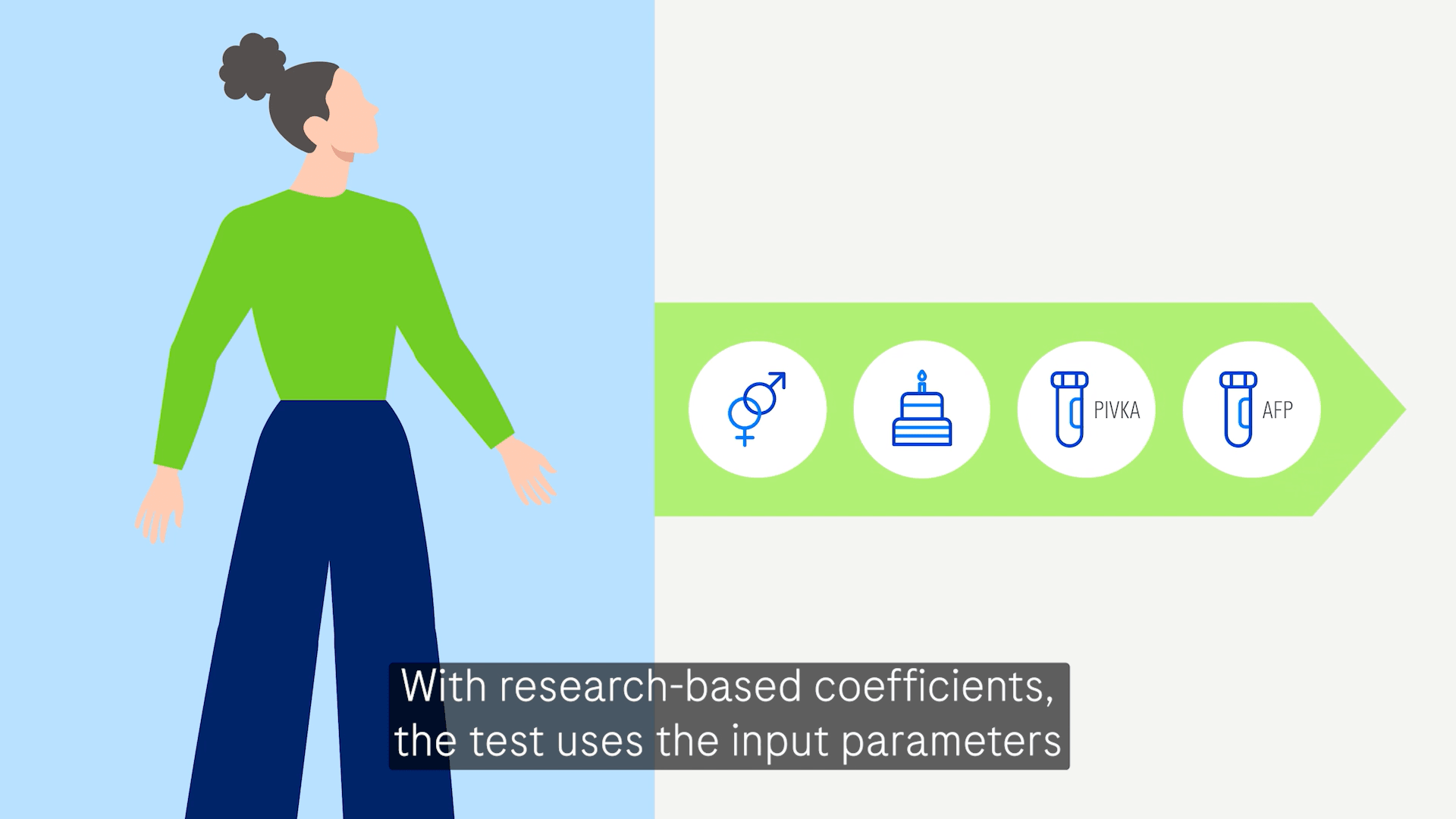
GAAD is an in vitro diagnostic multivariate index assay utilized by clinicians to assist in the diagnosis of HCC, by combining in an algorithm the quantitative measurements of Elecsys AFP assay and Elecsys PIVKA II assay together with gender and age. GAAD must be interpreted in conjunction with other diagnostic findings and clinical information in accordance with standards clinical management guidelines.1

Integration into automated platform

Both biomarkers automatically available via navify Algorithm Suite.1

Clinical efficacy

Clinical performance demonstrated in a multicenter evaluation study.13

Elevated diagnostic precision

Superior performance to AFP alone.13

Continuing innovation

1st diagnostic multivariate index assay from Roche - aid in diagnostic for HCC.1

I can access new algorithms at any time without much effort, without having to worry about further [IVDR] evaluation effort

Prof. Dr. Ralf Lichtinghagen | Laboratory Director at the University Hospital of Hannover

Benefits

Key benefits of GAAD

Discover the transformative benefits of the GAAD algorithm, designed to deliver an easy-to-understand and clinically validated risk score for early and all stages HCC detection. Directly integrating into the existing clinician's (electronic health records) workflows via navify Algorithm Suite, GAAD enables an automated process that supports healthcare professionals to act swiftly and effectively.

Trust

Easy-to-understand and accurate risk score, a cut-off that is clinically validated.1,13,14,15

Performance

GAAD has a specificity of 97.3% and a sensitivity of 70.1% for early-stage HCC detection and 83.1% sensitivity for all stages.13

Clinical support

Amplify the signs of early-stage HCC, helping healthcare professionals in more effective clinical decisions.

Automation

GAAD directly integrates into the existing workflow via navify Algorithm Suite, enabling a fully automated workflow.

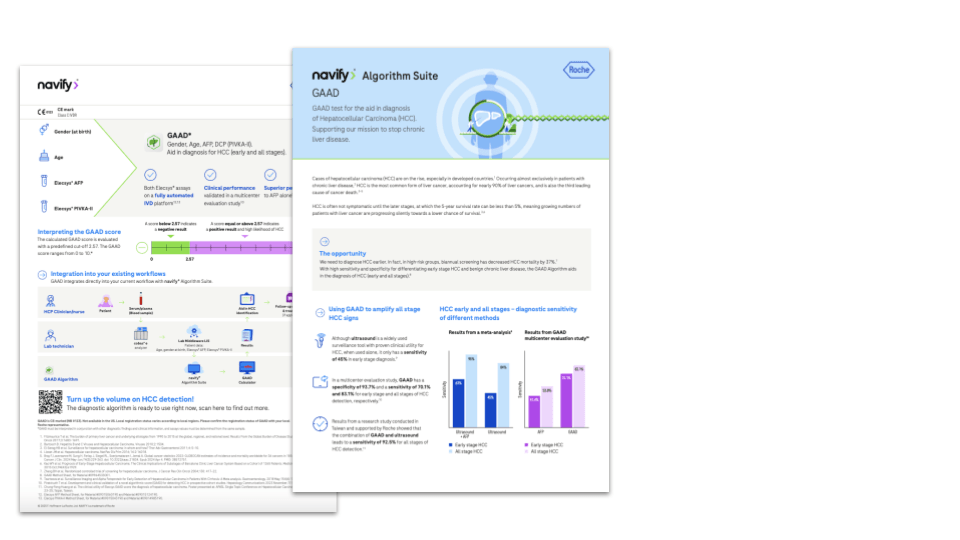
Image of a navify® Algorithms, GAAD brochure.

Clinical data that speaks for itself

Elevate your HCC detection capabilities with our evidence-based digital solution.The combination of GAAD and ultrasound achieves a remarkable 92.5% sensitivity for all stages of hepatocellular carcinoma.14 With GAADs high specificity of 94.6% and sensitivity of 73.1% and 77.4% for early-stage and all stages,14 you can enhance early-stage diagnosis seamlessly within your current workflow using navify Algorithm Suite. Download our brochure to explore how GAAD can transform your clinical practice.

Would you like to learn more?

Get in touch with our sales team.

Integration of GAAD into the existing workflow

GAAD is a CE-marked (NB 0123)* algorithm integrated into navify Algorithm Suite. The cloud-based platform enables direct integration of the GAAD algorithm into the existing workflow. Watch the video.

*Not available in the US. Local registration status varies according to local regions. Please confirm the registration status of GAAD with your local Roche representative.

Integration

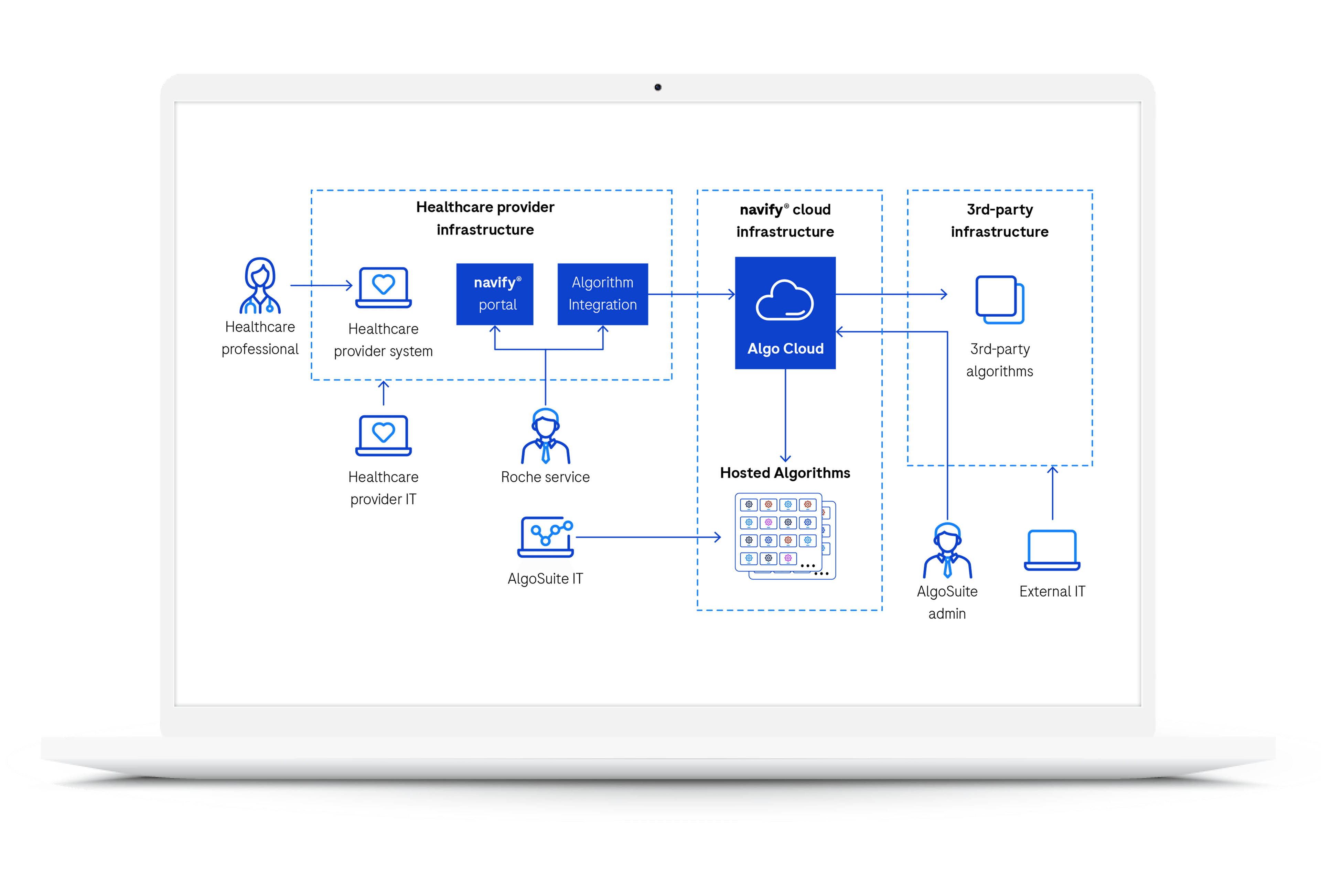
Integration via navify Algorithm Suite

Experience a single integrated platform designed for healthcare providers and laboratories that simplifies IT complexity while reducing the risk of vulnerabilities. With integrated Roche and partner medical algorithms, we provide a comprehensive solution that streamlines processes and enhances collaboration.

Flow chart illustrating the integration via navify Algorithm Hub, connecting patients, healthcare providers, and laboratory systems.
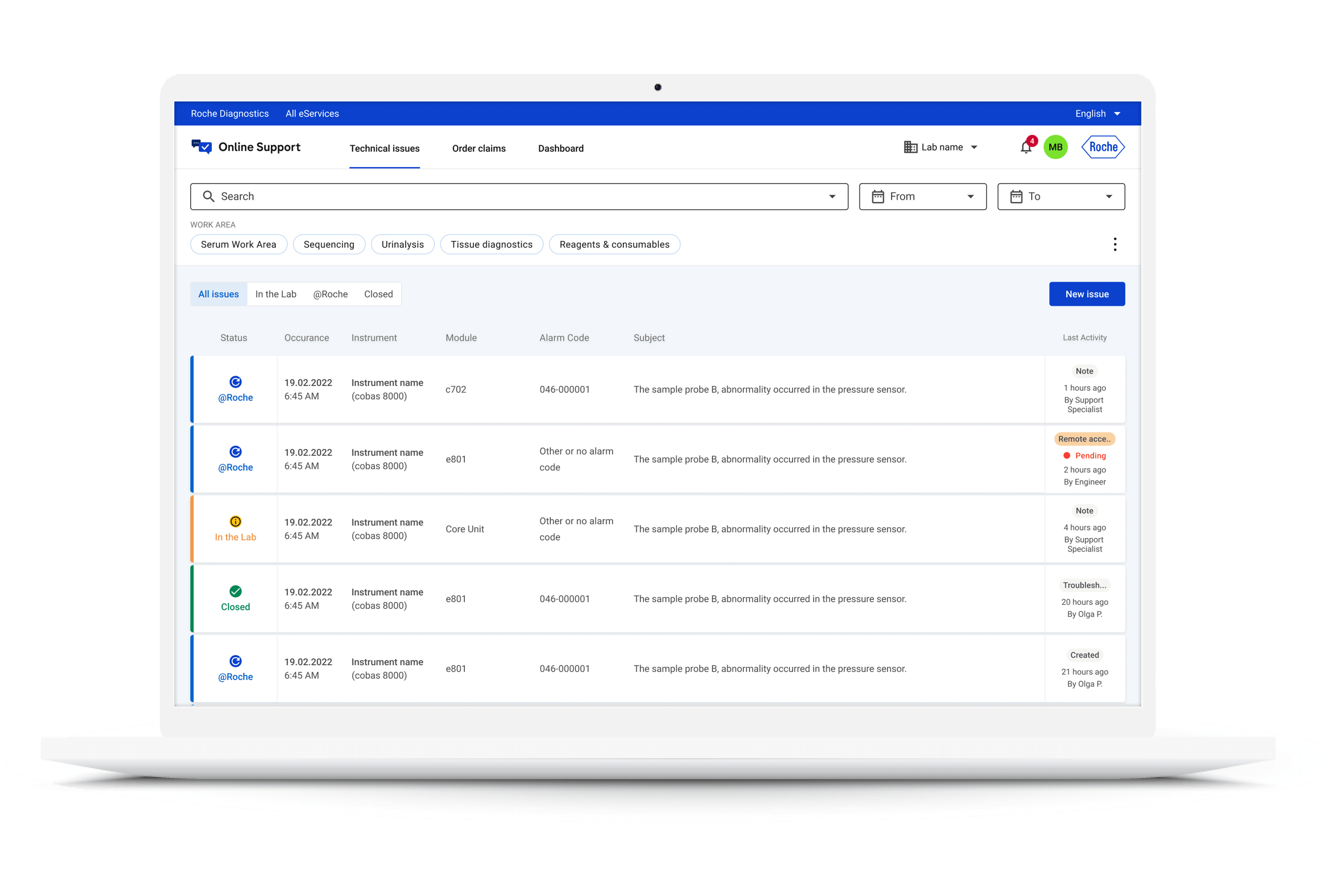
 A laptop screen displaying online support user interface.

Single point of contact for customer support

Roche offers centralized customer support for all algorithms in our portfolio to ensure consistency and reliability. We manage issues that arise for all hosted algorithms, streamlining the process and eliminating the need for customers to engage with individual providers.

A laptop screen displaying a security and data privacy flow chart.

Security and data privacy

Security and data privacy are central to Roche's operations, founded on a "Security and Privacy by Design" philosophy and ISO/IEC 27001 certification. Our dedicated technical team performs ongoing risk assessments, penetration tests, and network monitoring to minimize IT complexity and vulnerabilities, prioritizing data confidentiality to protect patient information across all partners.

FAQs

Frequently asked questions

If you don’t find answers to your questions here, we’re happy to provide more information and discuss your needs in detail.

Unleash the power of digital transformation

Navigating digital transformation can be overwhelming. This is why we now offer tailored software plans designed to address your needs and challenges.

Roche Diagnostics

At Roche Diagnostics, we understand the need to go beyond our products and see the bigger picture, creating a world where product and services come together. Roche Service Solutions refers to our service offering and encompasses our full service portfolio. Our total solution package means we can provide you with the personalised mix of products and services you need. Our digital services enable you to quickly connect with us and help make your life more manageable.

References and notes
  1. Method Sheet GAAD V1, reference: 09342192001.
  2. El-Serag HB, Davila JA. Surveillance for hepatocellular carcinoma: in whom and how? Ther Adv Gastroenterol. 2011;4:5–10. DOI:10.1177/1756283X10385964.
  3. Kao, Wei-Yu et al. Prognosis of Early-Stage Hepatocellular Carcinoma: The Clinical Implications of Substages of Barcelona Clinic Liver Cancer System Based on a Cohort of 1265 Patients. Medicine (Baltimore). 2015 Oct;94(43):e1929. DOI:10.1097/MD.0000000000001929.
Disclaimer
  • Not every digital product is available in all markets. The use of any third-party app is subject to a separate license agreement with the respective third-party app developer. Roche gives no warranties (express or implied) with regard to any third-party app. Third-party apps might not be available in your country. This website and its content may be accessible worldwide, Roche assumes no liability with regard to the access to the information, which may not be compatible with legislations or regulations in force in your country.
  • GAAD must be interpreted in conjunction with other diagnostic findings and clinical information and assays values must be determined from the same sample.
  • MC--15983
Explore navify® Algorithms | GAAD for the detection of HCC